The future of agentic brands
How I’m evolving Topiary’s approach to developing brand systems that clients and agents can keep building from.
A typeface can be named in a guideline, but the reason it belongs to a brand requires further explanation. So does the difference between a composition that follows every rule and one that just feels right.
The question brands are now left with is, how much of the thinking behind those choices can travel with the work?
At Topiary, that question is beginning to change what I consider a complete brand system.
Decisions that drive the brand
A brand identity takes shape through choices about what deserves emphasis, what can be quiet, and how much variation it can hold. Those choices give an identity its character. Some choices become clear rules. Others remain in the designer’s judgment, visible across a body of work but difficult to recover from any single example.
I want to get more precise about both. A color value is easy to record. Explaining why that color occupies a small part of a composition, or when that balance should change, asks more of the designer.
Writing this type of reasoning down is itself a design exercise. It can reveal where a system is coherent, where it depends on an unspoken preference, and where it needs room for interpretation.
An agentic brand system brings those decisions together with the assets, guidance, and working examples an agent can use to make something. A template can show how a treatment belongs in a composition; code can preserve its behavior when the text or format changes. The guidance explains when to use it. I want to make deliberate choices easier to carry forward while keeping space for new art direction.
Selected example / Fuser
What I’m testing
Below is an example spec from my brand expansion work with Fuser Studio. The original brand work includes a documented visual library, templates, and a custom grid tool. I’m bringing selected parts into code and adding guidance an agent can read.
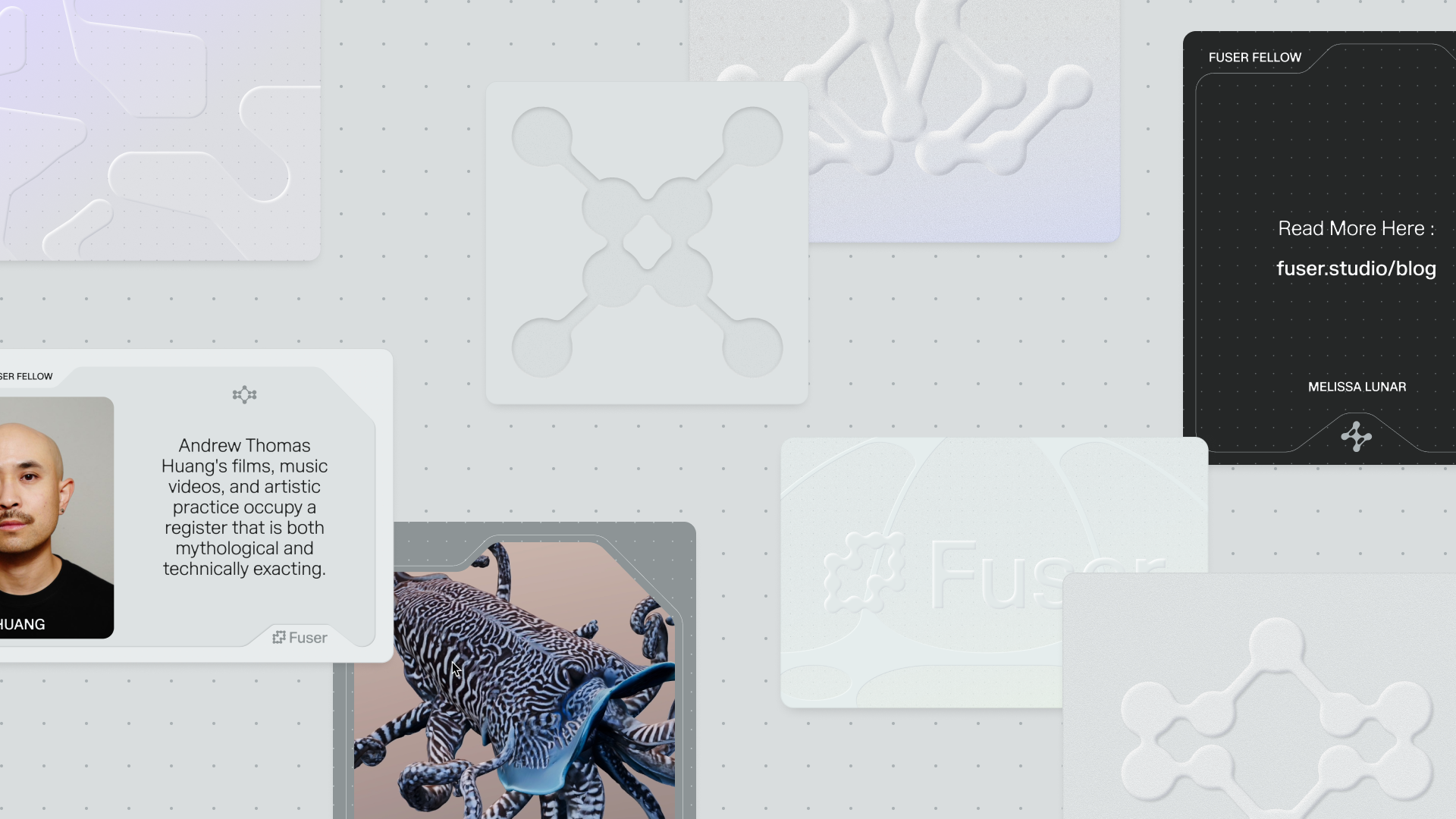
The browser below pairs those notes with rendered examples. This is a working study of how the original design decisions can become material to build with.
I’m adapting the brand-kit structure in Kortix’s open-source Suna repository, which draws on Little Plains’ model. A starting file directs the agent to the right guidance, a shared values file generates the tokens, and decision notes keep the reasoning and unresolved questions alongside the work.
These are selected excerpts from the study. Fuser’s complete working kit stays private. The agent-readable layer is a new experiment alongside the original work.
Continuity is part of the practice
Handoff is one moment in this work. The system begins taking shape much earlier, while the identity is still being explored and decisions are still open. For new projects, I’m capturing the reasoning while the work is being made, then testing whether another person or an agent can use it to make a coherent next piece.
A template can test whether a rule is useful. A tool can make a particular visual technique available to more people. A new application can expose something the original system never resolved. The aim is practical: help a small team keep making considered work as the company grows, including the period before they hire their own designer.
There is also an authorship question here. As more people and agents contribute, someone has to decide which changes belong to the brand. The reasoning should remain available to be understood, challenged, and revised.
A system that only reproduces the work already made tells us something about consistency. I’m more curious about what happens when it encounters a brief the original designer never anticipated.
A quick note of thanks to Little Plains for sharing their thinking on agentic brands so openly. Their writing has helped shape this exploration.